
USask research team receives $1.2M CIHR grant to advance potential epilepsy treatment
A University of Saskatchewan (USask) research team has received more than $1.2 million from the Canadian Institutes of Health Research (CIHR) to advance the development of a potential new treatment for temporal lobe epilepsy.
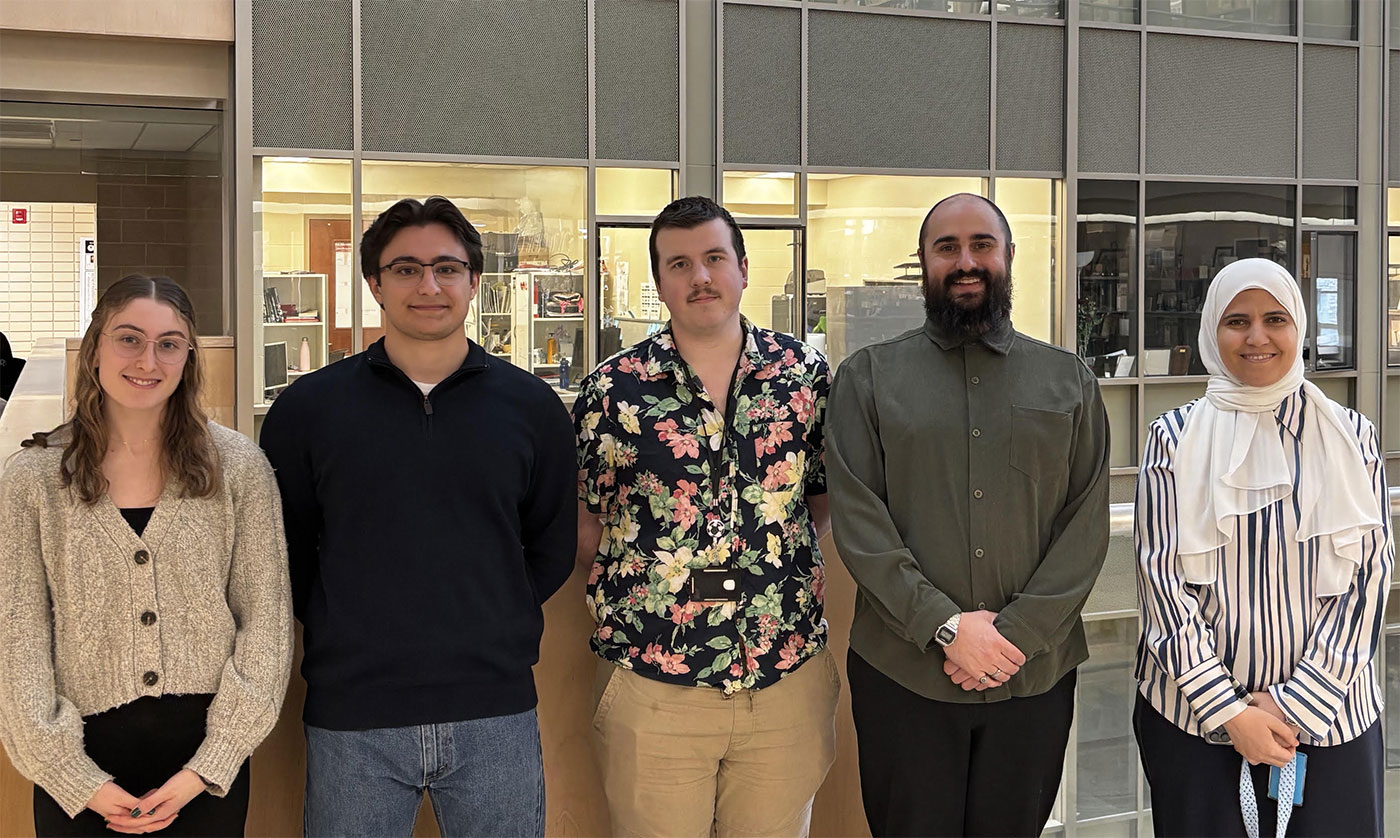
By Jason BelhumeurThe five-year project, valued at $1,239,300, is titled Advancing CB1R Cannabinoid Receptor Positive Allosteric Modulators for Novel Therapies in Temporal Lobe Epilepsy. It brings together researchers from four laboratories at USask and Northeastern University.
The funding will support research costs and trainee stipends at both institutions.
The team is developing potential drug candidates known as agonist-positive allosteric modulators (ago-PAMs) that target the type 1 cannabinoid receptor (CB1R) as a possible treatment for temporal lobe epilepsy (TLE).
CB1R helps regulate communication between neurons in the brain. It is also activated by THC, the compound in cannabis responsible for its intoxicating effects.
Because CB1R plays a role in regulating neuronal activity, researchers have identified it as a promising target for epilepsy treatment. The team's approach uses ago-PAMs to enhance CB1R activity without producing the intoxicating effects or dependence associated with THC.
Previous studies by the researchers showed that ago-PAMs reduced seizures in other forms of epilepsy. The new project will focus on temporal lobe epilepsy, the most common form of epilepsy in adults.
“Our team is extremely thankful for the recent receipt of more than $1.2 million in funding over the next five years from CIHR,” said the research team. “This project is the shared collaborative success of four labs.”
The researchers will pursue three main objectives:
- Design and screen improved versions of CB1R ago-PAM compounds.
- Assess and optimize the compounds' ability to reach the brain and determine how long they remain active in animal models.
- Apply these findings in a mouse model of temporal lobe epilepsy.
The team hopes the research will deepen understanding of how CB1R functions in epilepsy and help refine the use of cannabinoid-based medicines.
Ultimately, the project aims to accelerate the development of new therapies for people living with epilepsy and address an important unmet need in the treatment of temporal lobe epilepsy.
The College of Pharmacy and Nutrition congratulates Laprairie and his research collaborators on this significant CIHR funding and their continued work to advance cannabinoid-based therapies.